We read that Nicolas Sarkozy visited the BBC radio studio in London where the general famously urged his compatriots to resist Nazi occupation.The visit is the first by a French president to mark Gen de Gaulle's broadcast on 18 June 1940. The general had fled his country the day before as a new administration, headed by Philippe Petain, sought an armistice with Hitler. In the stirring radio appeal General de Gaulle declared himself leader of the "Free French", spawning the French Resistance, which went on to play a crucial role in defeating the Germans.He told his nation that "the flame of the French resistance must not and will not be extinguished". But historians point out that he was not seen as a saviour in 1940. They say his now revered broadcast went almost unnoticed at the time, with a very limited audience on the BBC French Service.
Only about 5 percent of the French were even nominally members of the underground, perhaps 200,000. Of these, scarcely any ever fired a shot in anger, dynamited a train or sent a clandestine radio message.French Communists coined a slogan - "the party of the 70,000 martyrs" - the number they claimed to have been executed by the Germans. The true figure, according to Porch, was fewer than 350. Even those few French who helped downed airmen often did so for the money. The standard reward for getting an escapee into Spain was about $50,000 in today's money according to a book by historian Douglas Porch, "The French Secret Services". Also Marcel Ophuls’ documentary, “The Sorrow and the Pity” cast a reproachful eye on the legions of French citizens who quietly supported the collaborationist government in Vichy. “They all tell me they did their share for the Resistance,” an aging veteran tells the camera. “I have to listen to these fairy tales without wincing.”
Oxford historian Robert Gildea makes the argument that the occupation presented “ample opportunities for profit and pleasure that many were only too ready to take.” The French were “only too delighted to procure wanted goods and sell them to the Germans.”, farmers and winegrowers “generally did well under the occupation.”, that the “French women, for their part, were equally fascinated by the Ubermenschen who had taken control of their country.” and the “Germans did their bit to tackle France’s demographic deficit by fathering between 50,000 and 70,000 children.”
“The French were only too happy to turn one another in” to Nazi authorities he says in “Marianne in Chains,” a book that attempts to recreate the complex world of France during the German occupation. Regular, average citizens sent thousands of the correspondence identifying members and supporters of the resistance, black marketers and Jews. In many cases the letters were intended to get back at somebody for personal reasons and not politics or ideology. About one fourth of all accusations received by the authorities were of this kind.
Albert Speer was asked after the war about the effect of the French Resistance. He replied, "What French Resistance?”
Showing posts with label The Pope. Show all posts
Showing posts with label The Pope. Show all posts
Saturday, June 19, 2010


Saturday, September 01, 2007
Sound of Silence
Hows this for twisted logic .
Pope Benedict said on Saturday that even the late Mother Teresa of Calcutta "suffered from the silence of God" despite her immense charity and faith. this stems fromthe release of some of the blessed saint -to- be letters which said :-
"Jesus has a very special love for you ... but as for me, the silence and the emptiness is so great, that I look and do not see, — Listen and do not hear — the tongue moves in prayer]but does not speak ..."
All believers know about the silence of God," The Pope said in unprepared remarks. "Even Mother Teresa, with all her charity and force of faith, suffered from the silence of God," he said.
He said believers sometimes had to withstand the silence of God in order to understand the situation of people who do not believe.
Just can't beat thinking like that
Thursday, May 17, 2007
Married Priests
 Today's BBC carries a report on celibacy and the the Catholic priesthood . A Catholic priest in south-west France has been forced out of the clergy after admitting to the Church authorities that he was having a sexual relationship with one of his parishioners. For the past 22 years, the couple have been in a sexual relationship, which is forbidden to a Catholic priest who has vowed to remain celibate. The villagers back their priest and his partner and have spent three weeks "on strike" -boycotting Mass and refusing to go to Church with the new priest. Huge protest banners hang from the belfry and roof, turning Asson's 13th Century place of worship into a giant billboard- a a backlash against hierarchical traditions they feel have long been outdated.
The political and economic reasons for celibacy in the priesthood i have posted on this blog previously .
"...The legislation that effectively ended optional celibacy for priests came from the Second Lateran Council under Pope Innocent II. The true motivation for these laws was the desire to acquire land throughout Europe and strengthen the papal power base. The laws demanding mandatory celibacy for priests used the language of purity and holiness, but their true intent was to solidify control over the lower clergy and eliminate any challenge to the political objectives of the medieval hierarchy."
Tuesday, May 15, 2007
The Blood and The Cross
 From Reuters report :-
Outraged Indian leaders in Brazil said on Monday they were offended by Pope Benedict's "arrogant and disrespectful" comments that the Roman Catholic Church had purified them and they had welcomed the arrival of European priests at the time of the conquest as they were "silently longing" for Christianity.
Millions of tribal Indians are believed to have died as a result of European colonization backed by the Church since Columbus landed in the Americas in 1492, through slaughter, disease or enslavement. Priests blessed conquistadors as they waged war on the indigenous peoples.
Many Indians today struggle for survival, stripped of their traditional ways of life and excluded from society.
"The state used the Church to do the dirty work in colonizing the Indians..." said Dionito Jose de Souza a leader of the Makuxi tribe in northern Roraima state.
"It's arrogant and disrespectful to consider our cultural heritage secondary to theirs," said Jecinaldo Satere Mawe, chief coordinator of the Amazon Indian group Coiab.
"We repudiate the Pope's comments," said SandroTuxa who heads the movement of northeastern tribes. . "To say the cultural decimation of our people represents a purification is offensive, and frankly, frightening."
Even the Catholic Church's own Indian advocacy group in Brazil, known as Cimi, distanced itself from the Pope. "The Pope doesn't understand the reality of the Indians here, his statement was wrong and indefensible." Cimi advisor Father Paulo Suess told Reuters.
From the BBC :-
Indigenous leaders in Brazil have reacted angrily to Pope Benedict's comments that their predecessors had willingly converted to Christianity 500 years ago . The BBC's Emilio San Pedro said the Pope had said the Christianisation of the region had not involved an alienation of the pre-Colombian cultures. The BBC correspondent said Pope Benedict also made no mention of the violent history that followed or the documented decimation of native cultures in favour of the Christian model Conquistadores and other Europeans colonisers.
Thursday, August 31, 2006
Rent-a-priest.com
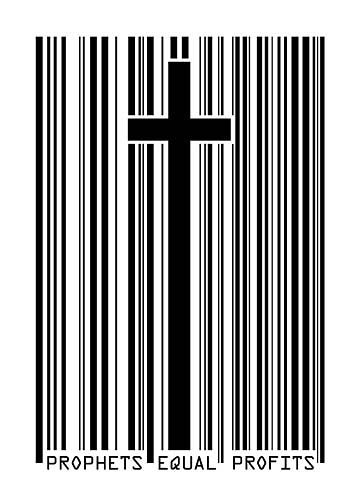
Came across this news item which led to this website that led me to read this article .
Quite illuminating upon the rise of Christianity and the power of the Vatican and the enforced celibacy of the priesthood :-
"...It began in AD 313, when the Roman emperor Constantine legalized Christianity within the Roman Empire. With his legislation, the early Church evolved from a persecuted group of small communities to become the official faith of a world power under Emperor Theodosius in AD 380.Constantine’s intentions in adopting Christianity were not entirely spiritual. His position was being challenged by political groups; he needed to display his power. Forcing other politicians to become Christians was a test of their loyalty.Constantine used the new religion as an effective tool to weed out his enemies. It strengthened his political power. Constantine also was faced with unifying the many peoples his armies had vanquished. Christianity was the key to establishing a new Roman identity in the conquered peoples. On the surface he made them Christians to save their souls, but this new religion was his final act of conquest over them.
With Christianity now the official religion of the Roman Empire, many things changed very quickly in the Church. Priests from the small communities were given special social rank among their new Roman friends. They no longer had to hide from Roman soldiers and fear for their lives. Instead, they received pay for their services as priests and enjoyed special privileges in Roman society. Bishops were given civil authority and assigned jurisdiction over the people in their area. Romans, who were members of the local ruling elite, quickly converted to Christianity as ordered by the Emperor. These were men trained in public life and skilled in city politics. They became priests and rapidly moved into positions of leadership in the Church.These Roman politicians, with their newly acquired priesthood, brought the impersonal and legalistic attitudes of government to the Church. The celebration of the Eucharist moved from small home gatherings to what we now call "mass" involving huge numbers of people in large buildings. The celebration of the Eucharist became a highly structured ritual that imitated the ceremonies of Rome’s imperial court. This Roman influence is the source of our vestments, genuflection, kneeling, and the strict formality of Mass.An institutional Church structure emerged mirroring that of the Roman government. Large buildings, church tribunal courts, rulers and subjects began to replace the family-based small communities that were served by a local married priesthood. The new Roman priests worked to shift authority away from the married priests in the small communities and consolidate political power around themselves. With the assistance of the Roman Empire, Church leadership became a hierarchy that moved away from its family origins and into the Roman mindset of a ruling class that was above the people in the street. Other changes occurred that shifted emphasis away from the people and towards the preferences of the Roman politicians. The Church adopted the Roman practice of men alone holding institutional authority. There is solid historical evidence that women served as priests and pastors prior to this time..."
Later on in the early Middle Ages :-
"...In this growing atmosphere of power and legalism, certain medieval popes abused their authority. In the year 1075, Pope Gregory VII declared that nobody could judge a pope except God. Introducing the concept of infallibility, he was the first pope to decree that Rome can never be in error. He had statues made in his likeness and placed them in churches throughout Europe. He insisted that everyone must obey the pope, and that all popes are saints by virtue of their association with St. Peter. The hierarchy viewed married priests as an obstacle to their quest for total control of the church and focused a two pronged attack against them. They used mandatory celibacy to attack and dissolve the influential priestly families throughout Europe and the Mediterranean world. At the same time they claimed ownership of the churches and the lands owned by married priests. As landowners the medieval hierarchy knew that they would gain the political power they sought in every country in Europe. An additional benefit of land ownership was money. They now had the ability to collect taxes from the faithful and charge money for indulgences and other sacramental ministry.This practice contributed to the Protestant reformation and the splintering of the Roman Catholic church community in the sixteenth century.In the eleventh century, the attacks against the married priesthood grew in intensity.
In 1074, Pope Gregory VII legislated that anyone to be ordained must first pledge celibacy. Continuing his attack against women, he publicly stated that "...the Church cannot escape from the clutches of the laity unless priests first escape the clutches of their wives". Within twenty years, things took a turn for the worse.In the year 1095, there was an escalation of brutal force against married priests and their families. Pope Urban II ordered that married priests who ignored the celibacy laws be imprisoned for the good of their souls. He had the wives and children of those married priests sold into slavery, and the money went to church coffers. The effort to consolidate church power in the medieval hierarchy and to seize the land assets the married priest families saw its victory in 1139. The legislation that effectively ended optional celibacy for priests came from the Second Lateran Council under Pope Innocent II. The true motivation for these laws was the desire to acquire land throughout Europe and strengthen the papal power base. The laws demanding mandatory celibacy for priests used the language of purity and holiness, but their true intent was to solidify control over the lower clergy and eliminate any challenge to the political objectives of the medieval hierarchy..."
Subscribe to:
Posts (Atom)